
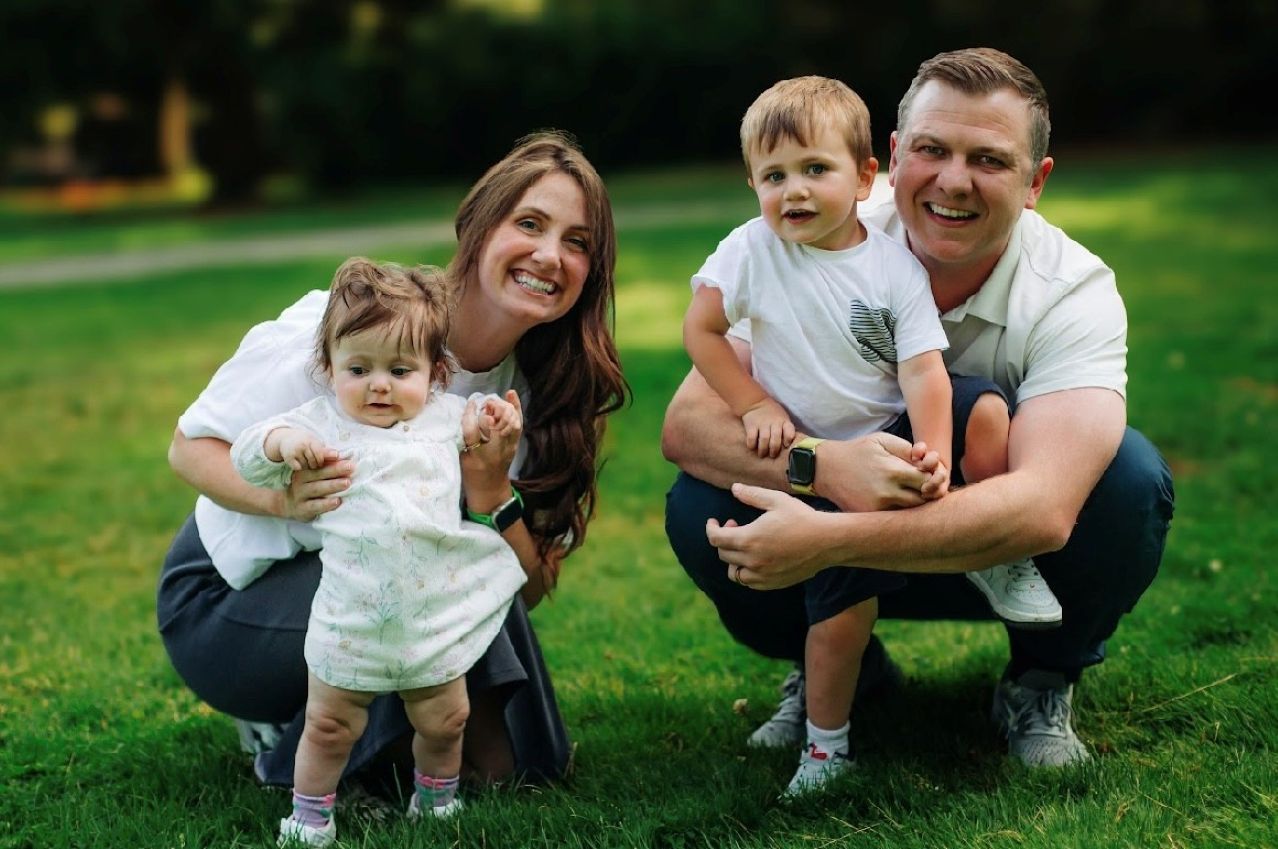
When Sara and Bryce welcomed their daughter, Lyra, in June 2024, they never imagined how quickly life would change.
“About four days after she was born, she got a belly button infection,” Sara said. “They sent us to the hospital for IV antibiotics, but during the same 15 minutes it took to drive there, her newborn screening from the day of her birth came back positive for SCID – Severe Combined Immunodeficiency Disorder. They told us we wouldn’t be leaving the hospital.”
Lyra’s diagnosis was exceptionally rare. “Not only did she have SCID,” Sara explained, “but she had the rarest form; there are only 32 known cases.
“When she was born and we learned Lyra was deaf, we thought that would be the hardest part. We had no concept of the challenges that were ahead of us.”
Doctors soon discovered that Lyra would need a bone marrow transplant. “After a month in Spokane, they said, ‘We’re going to fly you to Seattle so you can get her the best care.’ We were so lucky that we found a bone marrow donor who was almost a perfect match. Lyra had her transplant when she was four months old.”
At the beginning of their time in Seattle, Sara and Bryce lived apart, trading weeks between Spokane and sleeping bedside in Lyra’s hospital room so that one parent could always be home with their toddler, Luka. “Since Luka couldn’t be around her until after her transplant, we didn’t want to uproot him until the very last minute.”
That moment came when a room opened at Ronald McDonald House. “We were so grateful,” Sara said. “Lyra’s health is our number one priority, but we also have Luca, and he’s still little. It’s such a relief to have a safe place for him to play and meals ready when we’re exhausted. When you’re caring for two kids, including one who’s sick, not having to worry about food or safety means everything.
Being under one roof in Seattle for over the last year has brought the family both comfort and connection. “My husband is able to work remotely from Seattle, so all of us are here together, which is amazing,” Sara shared.
Some days, it is the little things that get Sara through. “Honestly, just talking with the staff and volunteers is a lifesaver. When I’m with my kids and talking to doctors all day, a simple ‘How are you?’ means so much. Those small conversations make me feel normal again, especially when our lives feel chaotic.”
Sara has also found encouragement from other parents. “Our situation can feel really isolating,” she said. “Friends and family try to help, but they don’t always understand. And conversations about Lyra’s health can be overwhelming for them. Being around people here who truly get it makes all the difference.”
The House has eased not only emotional strain, but financial pressure too. “I had to stop working, which was really stressful,” Sara said. “Before we knew this was an option, we tried to find a place to stay near the hospital but it was financially impossible. That’s why the House is so important. I don’t think anyone in this situation should have to worry about where their children will sleep.”
Today, 17-month-old Lyra continues her recovery surrounded by her family and supported by a community that understands.
“We’re very grateful,” Sara said. “The support of the community here has made this process so much easier. It’s been a lifesaver.”